
One Health Outreach
Not a medical camp. A route, run monthly, by the same team — so a patient started on treatment in March is seen again in April.
The Route in Numbers
January to June 2026.
Outreach contacts
Jan–Jun 2026
Conditions treated
1.42 per patient
Children under five
treated
Villages reached
plus 3–5 new villages added each year
Reach, and what people come with
People reached — 2025 full year, H1 2026, and the 2026 target
Top presenting conditions, 2025
34% of NCD visits in 2025 were repeat visits — the beginning of continuity rather than one-off treatment.
A clinical team, not a donation drop
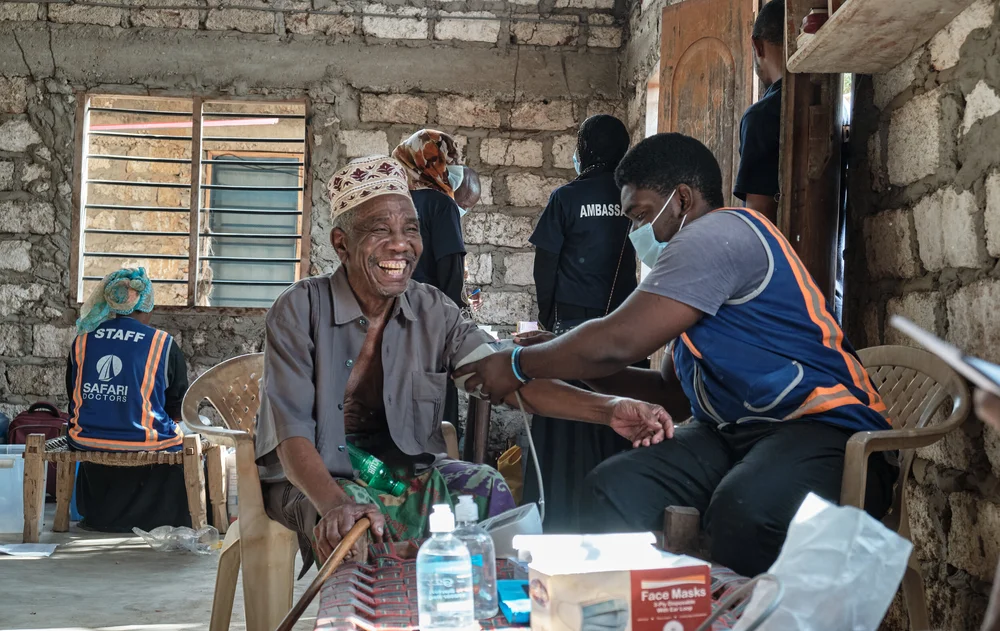
What travels
Nurses, a clinical officer, laboratory capacity and community health volunteers, with medication, diagnostics and cold chain. RMNCAH, integrated community case management, IMNCI, family planning and referral.
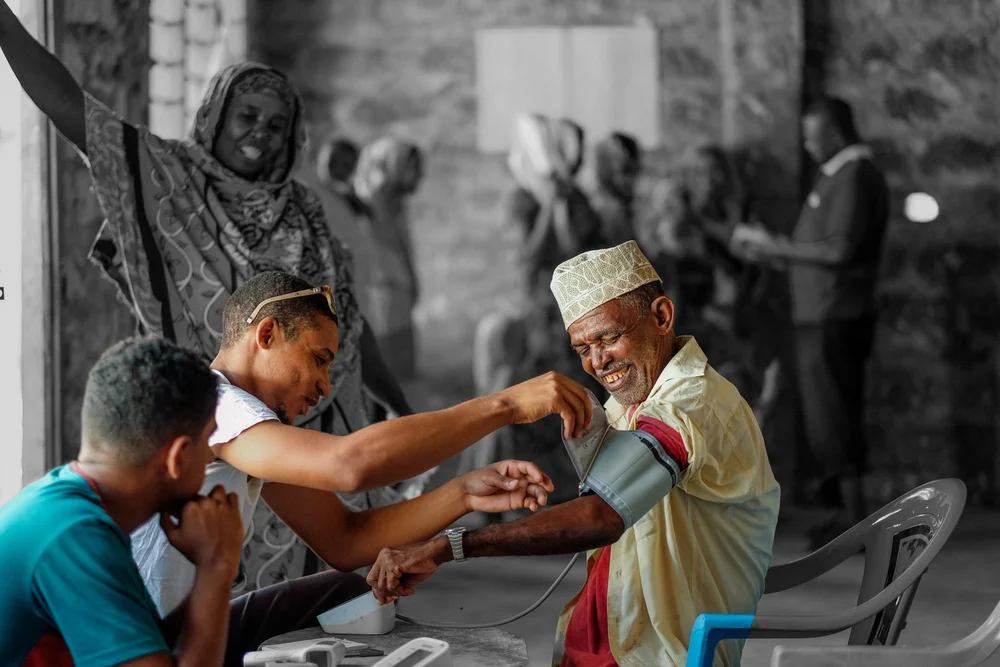
How it travels
Boat for the archipelago, vehicle for the Tana and Garissa, air when the season closes the rest. A boat captain and a driver are permanent positions — mobility is the service.
The dispensary is here, but there is no doctor and no medicine. When Safari Doctors come, we are seen.
Community member, Lamu archipelagoWhat it buys
One full outreach: the clinical team, the boat or vehicle, medication, diagnostics and cold chain, for every village on that month’s route.
What it returns
Roughly 1,700 contacts and 2,400 conditions treated at the first-half 2026 rate — and the same team back next month, which is what turns a visit into treatment.
The same patient, the next month
What the 2025 non-communicable disease records show about continuity.
160
patients returned in two or more months of 2025. Thirty-six came three times or more; nine came four times or more.
63.8%
of the 2025 NCD patient records are women — the group least able to travel for a facility appointment, and the group the route reaches at home.
7 in 10
NCD patients are over 50. Hypertension and diabetes are conditions of return visits, not single encounters.
14.3%
carry both hypertension and diabetes at once. Treating one and missing the other is how a chronic patient is lost.